Richard, Ping, Anuj et al., 2021
Richard S, Ping C, Anuj M, Lui J. The Asia Food Challenge - Understanding the New Asian Consumer. PWC, Rabobank, Temasek; 2021. Report No.: 2
Methods
A survey of 3,600 consumers across 10 Asian countries, as well as Australia and New Zealand and analysed over 3000 publicly traded food and beverage companies globally to understand key financial trends and trading multiples.
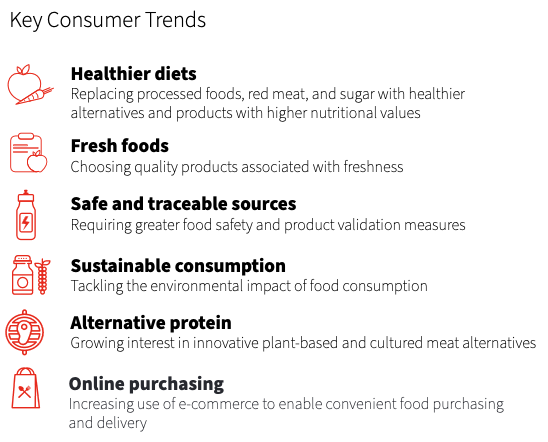
6 key consumer trends
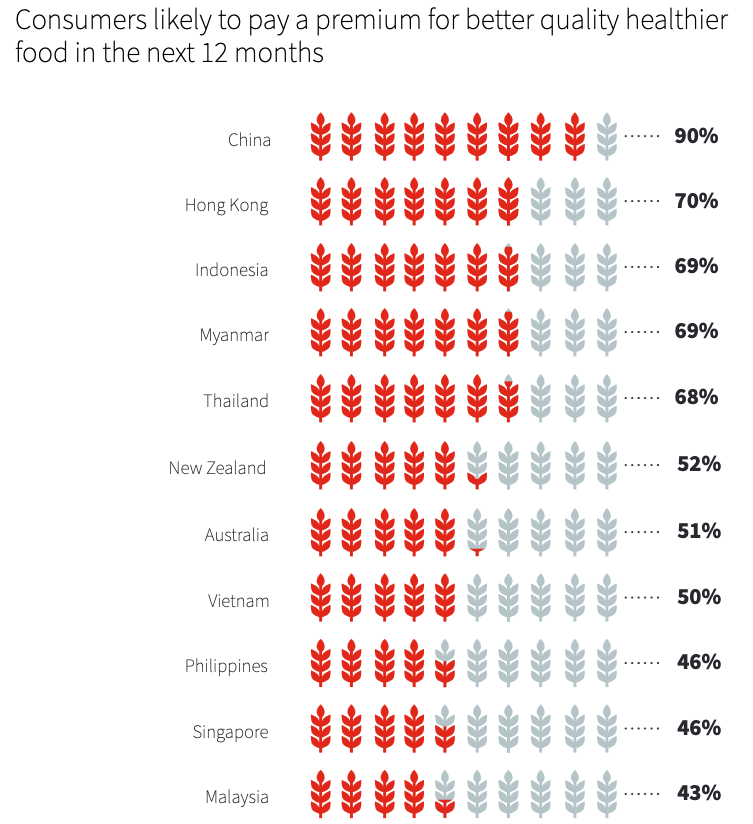
- SIngapore consumers are less willing to pay a premium for healthy food, bigger focus on price
companies with a broad emphasis on health, digital, and sustainable offerings have enjoyed valuation premiums over the last five years, compared with companies that did not.
General Asia
- growing middle class with higher food quality expectations
- smaller, urbanised households
- aging population with a greater demand for vitamins and supplements
Freshness
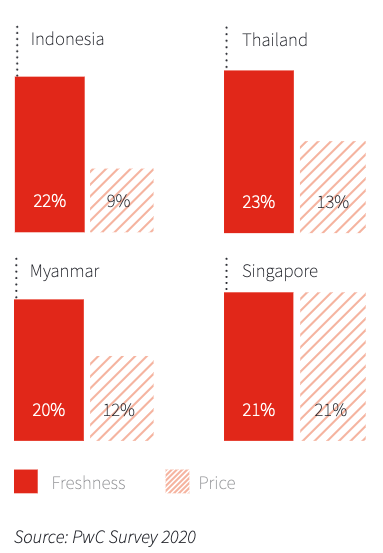
Malaysia is the only place where consumers rated price at the same level as fresness (16%)
Health
Malaysia has one of the world’s highest per capita sugar consumption levels, and Thailand consumes four times the WHO's recommended amount of sugar intake
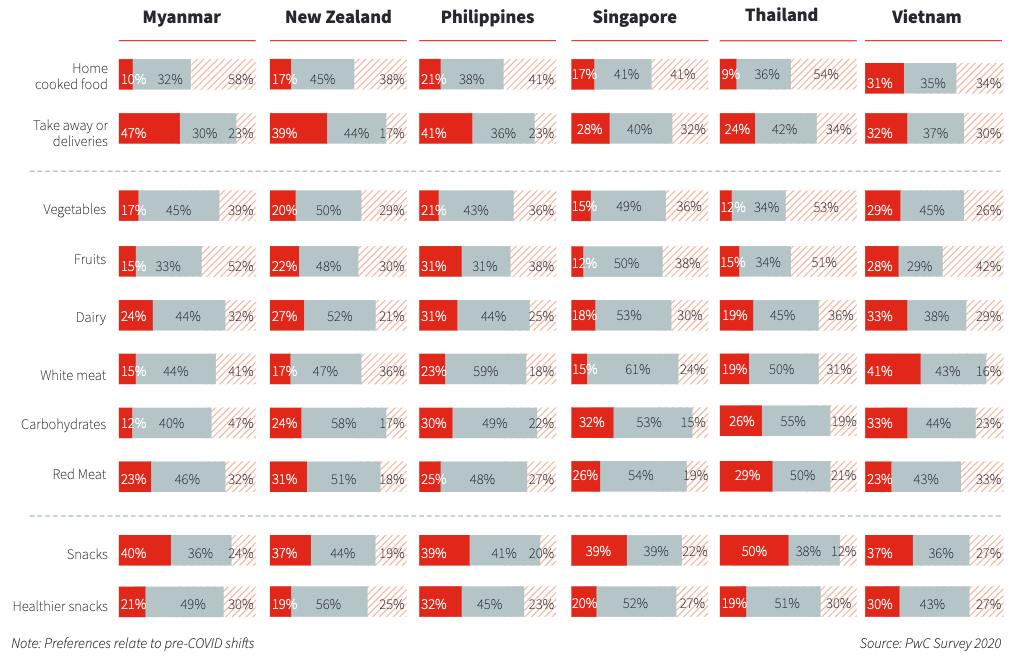
all Asian markets surveyed showed a clear shift towards healthier eating habits. Consumers define this as:
- Cooking more frequently at home and ordering fewer take-aways – which are often perceived to be higher in grease, fat, salt, and sugar content than home-cooked meals
- Replacing red meat with fruits and vegetables
- Cutting down sugar and opting for healthier snacks
While all the Asian countries polled displayed this shift towards healthier diets over the last three years, the most notable improvements were seen in China, Indonesia and Thailand. Meanwhile, consumers in Indonesia said they are twice more likely to cook at home today than in the past.
compared to three years ago
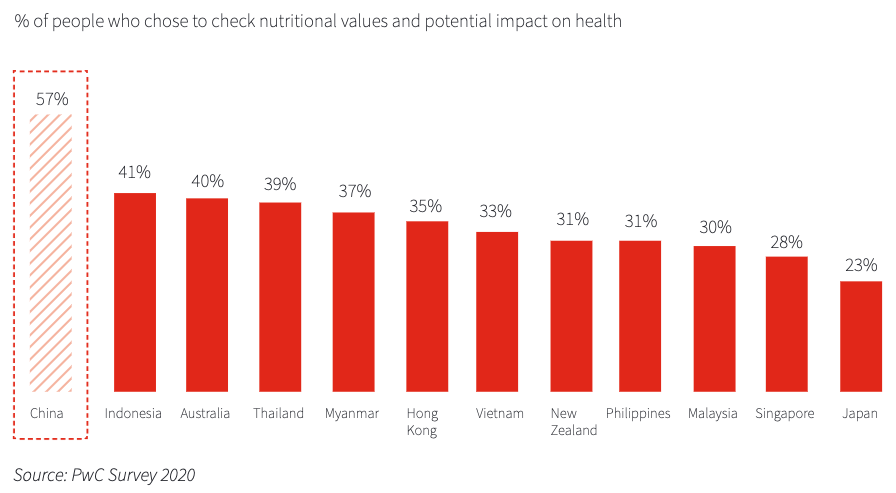
Focusing on nutrition in Indonesia: Consumers are largely focused on the quality of ingredients and their nutritional
values. With the fourth-highest burden of acute malnutrition in the world21, Indonesians are more open to reformulated food that offers higher nutritional content without compromising on taste.
Similarly, in Vietnam, “cutting back on meat” is considered a high priority, yet just 8 percent of respondents say they are managing to do so.
Quality
- In asia, quality often means freshness.
- In Vietnam, where local cuisine features vegetables and meat briefly cooked or eaten raw, freshly-picked produce is often seen as the gold standard.
- In markets like Singapore and Australia, consumers are generally willing to go by the production and expiry dates on groceries and non-processed packaged foods to determine freshness.
- Southeast Asian and Chinese consumers are now valuing fresh milk over milk powder. Lepur Greek yoghurt has achieved strong growth in recent years, despite charging two to three times more than cheaper alternatives.
Safety and traceability
The British Council reported that 70% of Vietnam's 16 to 30-year-olds rank food safety as their biggest concern, on par with job security
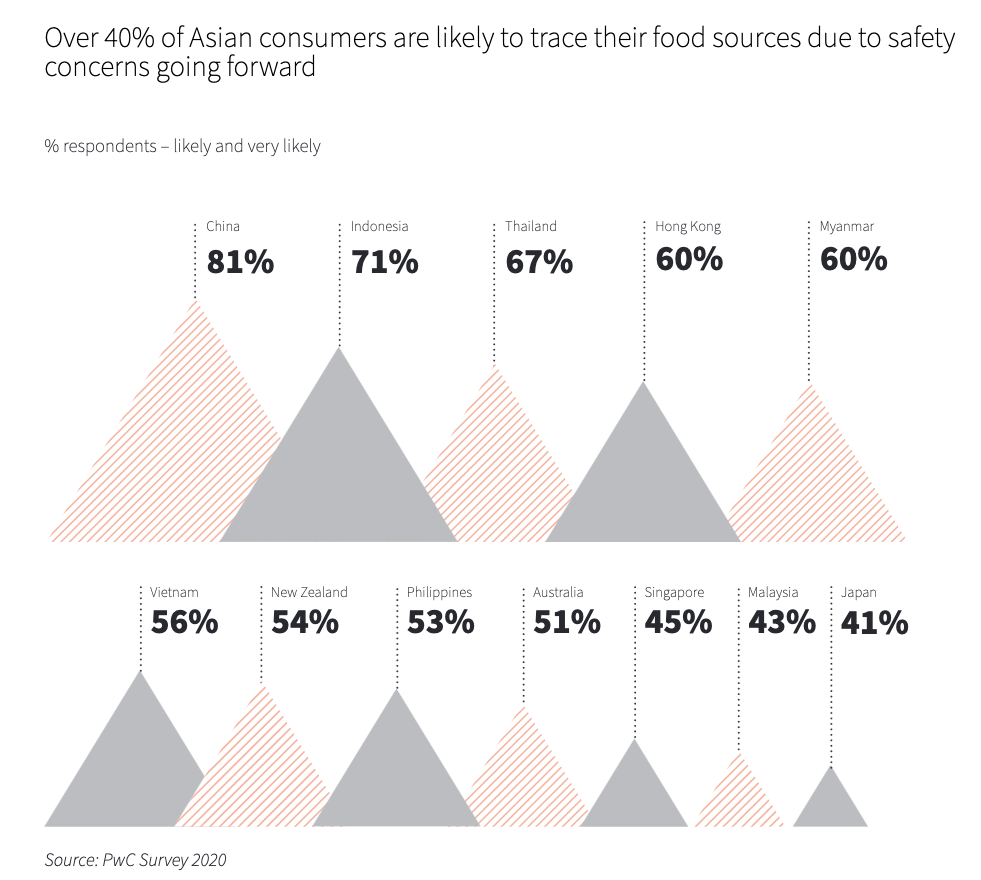
- 71% of Indonesians are likely to trace their food sources due to safety. This number in Thailand is 67%, in Vietnam 56%, in the Philippines 53%, in Singapore 45% and in Malaysia 43%.
sustainability
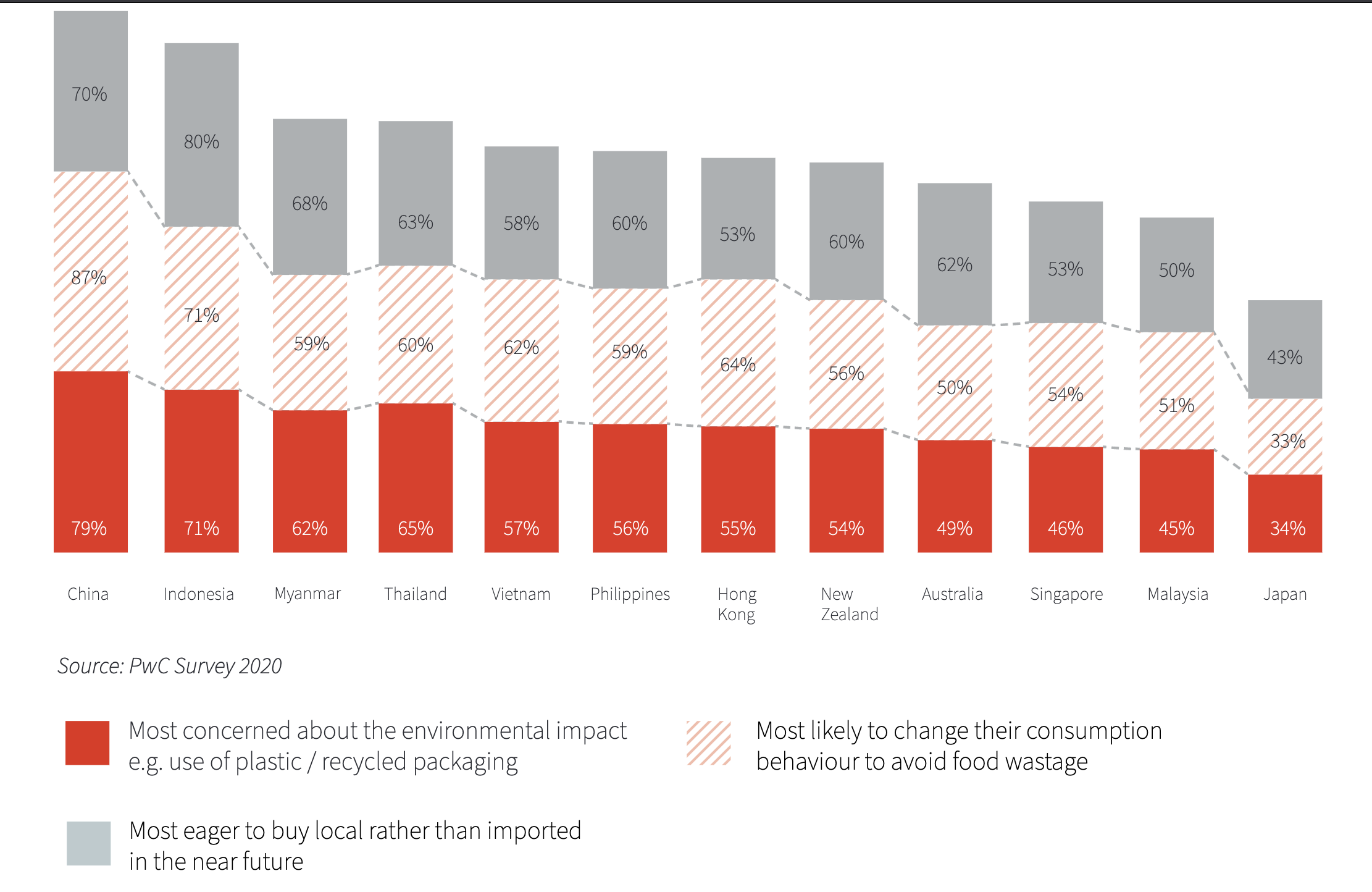
% that said likely or very likely
PB
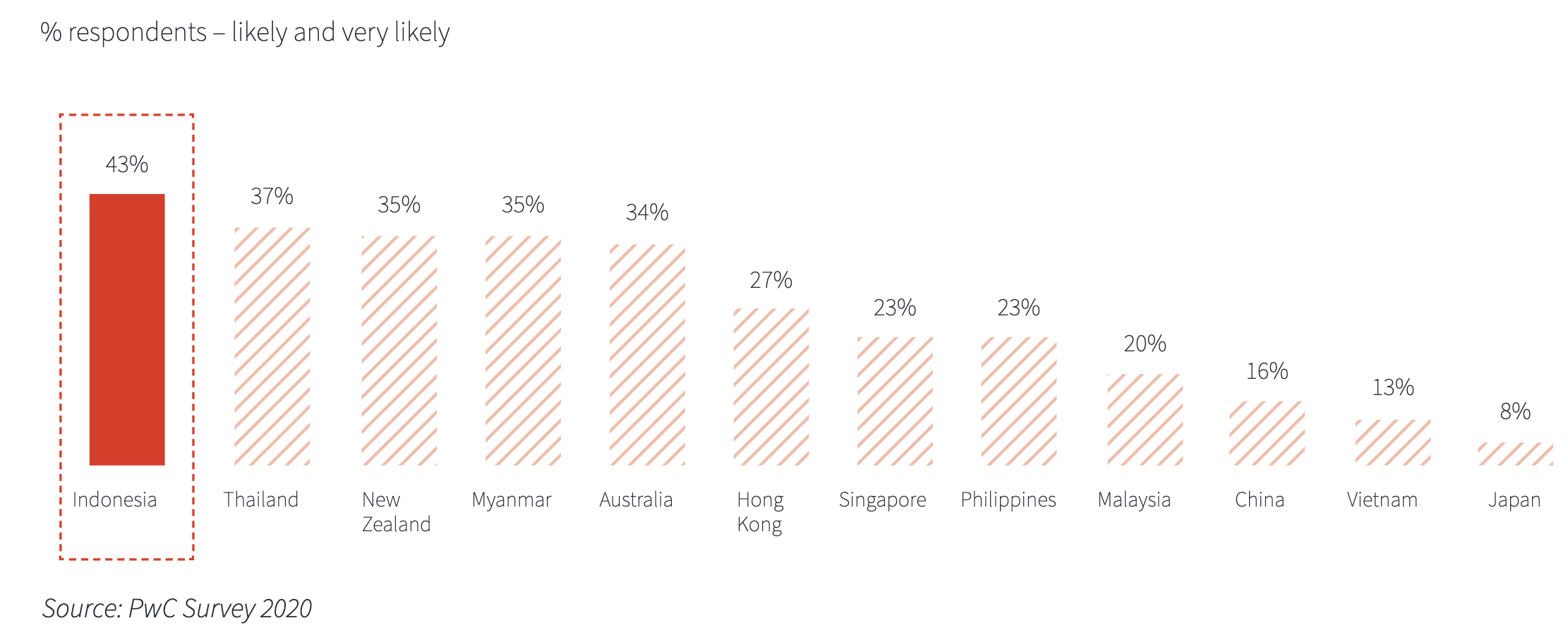
43 percent of Indonesian consumers willing to adopt a vegan or vegetarian diet in the next 12 months