Biofortification of vegetables to replace animal products
biofortification of fruits and vegetables to address malnutrition
Biofortification is the selective breeding (or genetic engineering) of crops, generally staple crops such as rice, maize and potatoes, to increase their micronutrient levels. For example, wheat and or rice and be bred to express higher levels of Zinc. This contrasts to standard fortification of foods, which involves adding micronutrients to them after the fact. An example of this is adding Iodine to table salt, a common practice around the world. The most prominent program in bioforitifaction is The CGIAR HarvestPlus Program which focusses on iron (Fe), zinc (Zn), and vitamin A as deficiency is highest amongst these in LMICs. HarvestPlus has at the time of writing deployed 293 varieties to over 100 million people in 30 countries (See their website for an interactive map). Notable examples of biofortified crops are shown below:
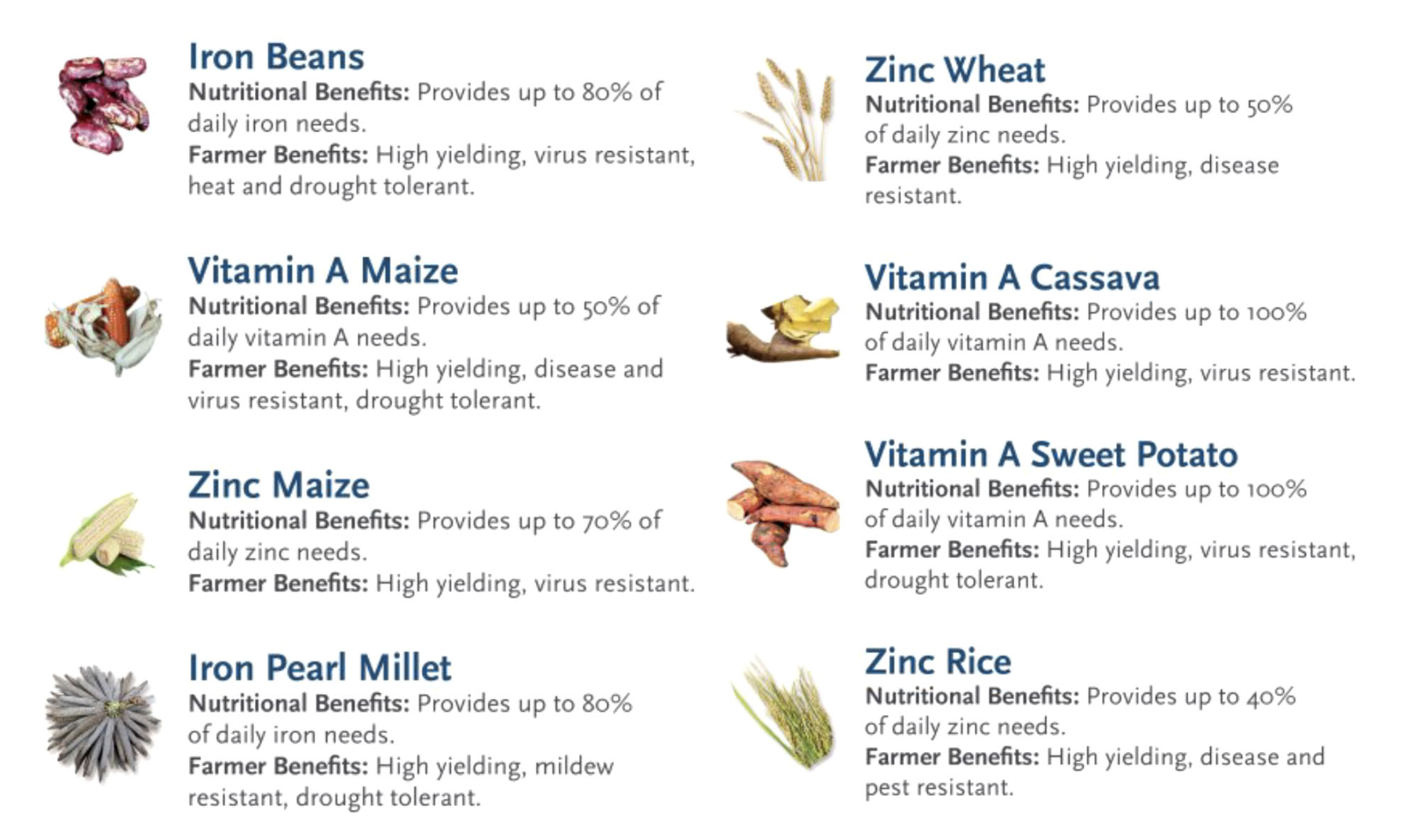
Figure XX: examples of biofortified crops and their benefits when eaten regularly. Source: Dwivedi et al., (2023) Frontiers in plant science.
Biofortification has the advantage for solving food micronutrient deficiencies that they require minimal changes in diet or farming practices: farmers can grow continue to grow and eat rice as they have always done, but benefit from increased vitamins and minerals. They do not require continuous investment or technological upgrades, meaning they can be given to hard to reach rural populations. A review of HarvestPlus programs between 2003 and 2016 indicated that bioforitification programs are cost-effective and crops significantly reduce micronutrient deficiencies. However,
However, critics argue that evidence the effectiveness of biofortified crops is slow to accumulate, despite $500M being invested in projects such as HarvestPlus in the last few years. They argue that biofortified crops have reduced genetic diversity which makes them vulnerable to disease, and that focusing solely on biofortification may divert attention and resources from more sustainable efforts to improve overall diet quality, such as promoting the consumption of a variety of foods including grains, vegetables, legumes, and fruits. Indeed, it seems that "bioforitifcation vs dietary diversification" is a hotly debated topic among scholars. They also point out that biofortifying crops typically reduces yields somewhat. Lastly, biofortification through genetic manipulation (transgenic biofortification) has encountered significant difficulties in the face of anit-GMO laws in Europe and China (traditionally bred varieties are generally accepted). While all these critiques are well received, none seem particularly fatal provided biofortified crops are not treated as the only solution to food security. Furthermore, when considering biofortified crops as an alternative to industrially farmed livestock, lower yields are unlikely to be an issue as reducing industrial livestock will free up immense amounts of cropland. Additionally, the disease risk from lower genetic diversity in biofortified crops likely pales in comparison to the known risks of the current low levels of genetic diversity in farm animals, (see section below). It is reasonable that non-GMO biofortified crops should be considered as another 'tool in the box', alongside traditional fortification and supplementation, as well as dietary diversification towards Future Smart Foods (see above).