Antimicrobial resistance
Key reference: https://ourworldindata.org/antibiotics-livestock
aka antibiotic resistance
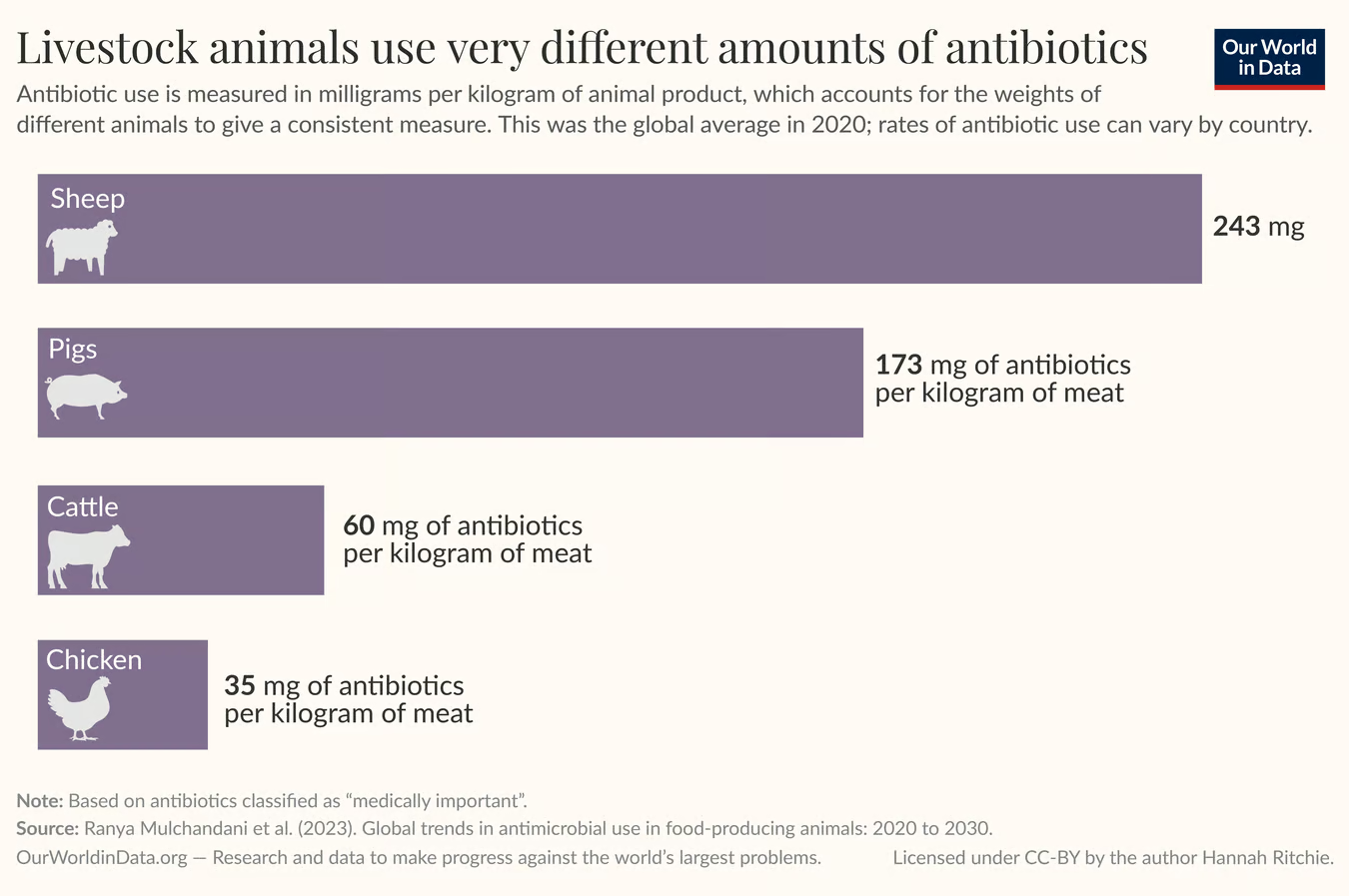
- In the United States, over 66% of medically relevant antibiotics are used in animal agriculture. Intensive livestock consumes four times the amount of antibiotics compared to livestock raised outdoors. However, the amount of antibiotics used in different animals varies a lot.
Different animals require different levels of antibiotics
One of the reasons why antibiotics are used in lower quantities in chickens is that they are killed at a much younger age. The fact that intensive livestock get far more antibiotics than animals raised outdoors is one reason why cows tend to get less antibiotics than pigs.
How does it work?
Healthy animals are fed low doses of antibiotics to speed growth and prevent disease, causing bacteria to adapt and become resistant.
Scale of the problem
- WAP, Alliance to save our antibiotics and The BIJ, 2022 found antibiotic resistant superbugs in UK rivers downstream of factory farms.
Solutions
- In many European countries, antibiotics today can only be administered with a prescription from a veterinarian.7 Vets are then given strict guidelines on how much and when they can be prescribed. Several countries — such as Denmark, Belgium, and France — have also imposed taxes or prohibited discounts on veterinary antibiotic sales, which reduces their incentives to prescribe them when they’re not essential.
- Pointing out that it doesn't negatively impact profitability One study found that antibiotic use on pig farms in the Netherlands fell by 54% between 2004 and 2016, without negative impacts on animal welfare or economic results (https://scholar.google.com/scholar_url?url=https://www.sciencedirect.com/science/article/pii/S0167587719306245&hl=en&sa=T&oi=gsb-ggp&ct=res&cd=0&d=5766918928476765157&ei=EApaZ5rsLdXEy9YP9oOM4Q4&scisig=AFWwaebF8lNDYNDDbEvCZkIu7jWJ). Other studies found here
Reading
- https://www.cgdev.org/sites/default/files/forecasting-fallout-amr-economic-impacts-antimicrobial-resistance-humans.pdf
- https://www.who.int/news/item/07-11-2017-stop-using-antibiotics-in-healthy-animals-to-prevent-the-spread-of-antibiotic-resistance
- https://www.desmog.com/2023/07/07/campaigners-warn-of-loopholes-in-laws-to-curb-antibiotics-on-uk-farms-after-biased-industry-consultation/
- https://www.worldanimalprotection.ca/siteassets/reports-pdfs/Silent-superbug-killers-in-a-river-near-you-report-2021-04/
If left unchecked, by 2050 drug-resistant microbes could kill 10 million people each year (more than currently die of cancer) and cause a cumulative $100 trillion in economic damage (as much as the global economic crisis of 2008–2009).
A study published in Science of the US supply of antibiotic-free beef found that fully 15 percent of the meat was from animals illegally fed drugs. New evidence also suggests pork producers are using prohibited antibiotics.
Sources found in this: GFI piece
Ardakani et al., 2023 find that factory farming uses 58% of antimicrobials given to livestock (seems small?)
A 2017 meta analysis found that limiting the antibiotics we give to farmed animals could cut AMR by 10-15%
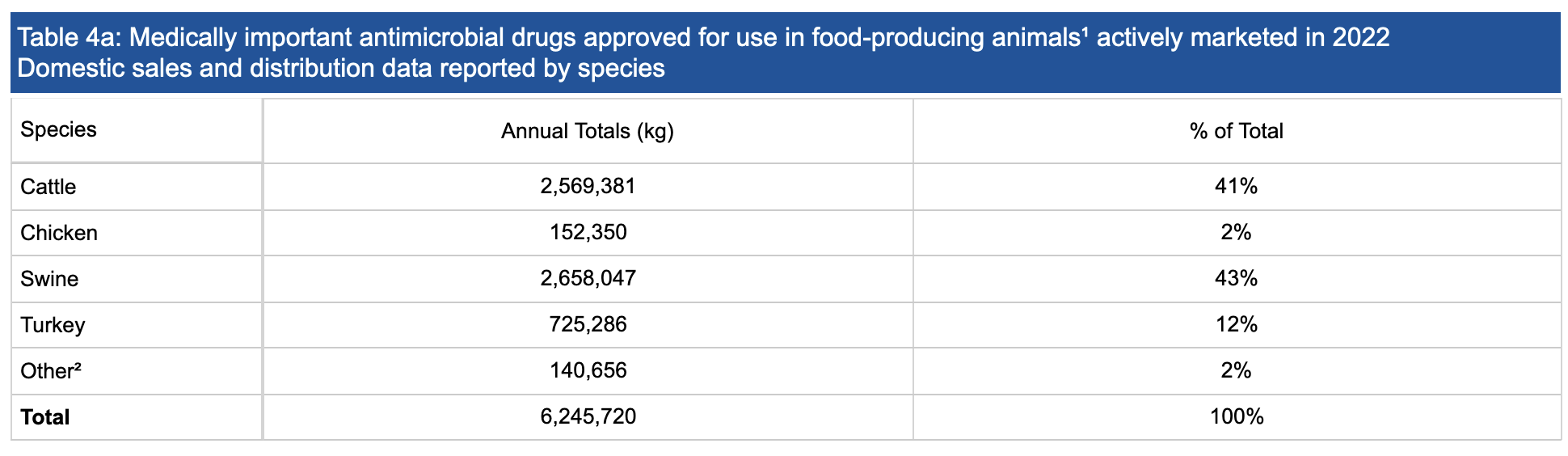
Interestingly, in the US only 2% of antibiotics are fed to chickens:
EU and UK
- In 2022 the EU banned giving animals prophylactic or preventative antibiotics, however the UK refused to ban it and implemented a weakened version, instead saying they could be used" in exceptional circumstances when there would be a risk of infection"
- new legislation was introduced in the UK on 17 May 2024 to restrict the use of antibiotics in farming [5]. The legislation prohibits using antibiotics to “compensate for poor hygiene, inadequate animal husbandry, or poor farm management practices”. Unfortunately, none of the supermarkets appear to have supply chains that are fully compliant with this new law.