A healthy diet is unaffordable in the UK without meat reduction
The UK gov's recommended healthy diet is unfeasibly expensive for the poorest
The 2023 Broken Plate Report by The Food Foundation reveals a distressing situation for food security within UK households, highlighting that the poorest 20% would have to allocate 47% of their disposable income to afford a diet that meets government health recommendations. This is because healthier foods can be as high as 3 times as expensive as less healthy options per calorie.
But reducing meat can help
- Copied from: A climate and health friendly diet is affordable for developed countries
- Hirvonen et al., 2019 Find the EAT Lancet is very affordable for developed countries
- Springmann et al., 2021 finds that for most #lower_middle_income_countries, all healthy and environmentally friendly diets were more expensive than current diets, but that vegan was most affordable
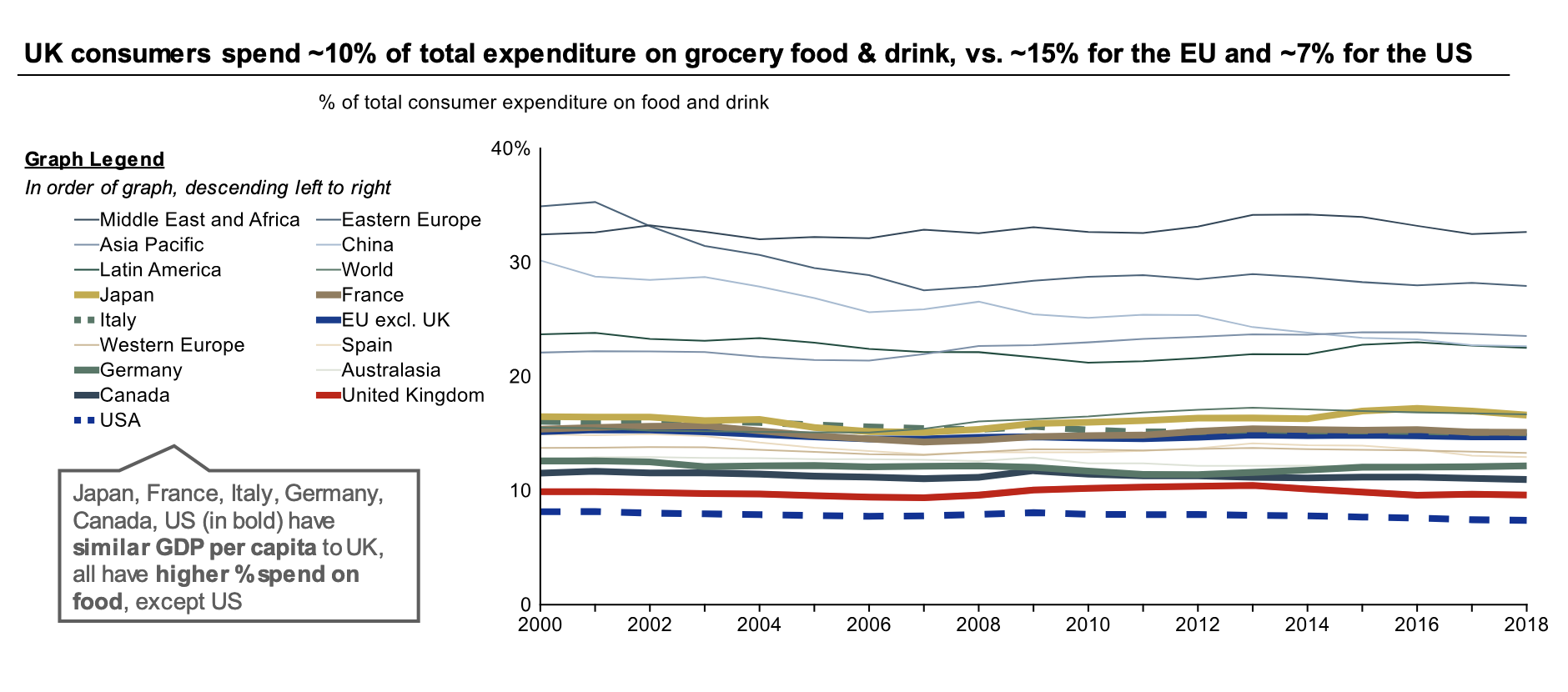
Food is not expensive in the UK compared to the rest of the world:
An analysis by Bain and company for the national food strategy found that UK citizens have some of the lowest food bills in the world measured as a % of income, only notably exceeded by the US.
To tackle food affordability, we need cheaper fruits and vegetables, not cheaper meat
- Convert animal feed cropland to growing vegetables for UK nutrition security
- We over consume meat
- UK consumers would need to eat at least 30% more of a variety of fruits and vegetables by weight to meet UK government dietary recommendations (NHS England, 2022).
- Only 9% of adults meet their fibre requirements (find better source, this is 2018). Notably, whilst meat contains no fibre, plant based meat alternatives do.
- University of Warwick researchers found that due to a market failure, a 25% subsidy on fruit and vegetable sales would trigger a price drop of up to 40%. This would result in a 15% increase in fruit and veg purchases.
- The National Food Strategy showed that just 55% of low income households meet the 5-a-day recommendation. A large reason for this is cost. In 2023 The Food Foundation examined all major UK supermarkets and found that even buying the cheapest fruits and vegetables, it would take up 34-52% of a poor family's weekly food budget to ensure every members meets their 5 a day. An analysis from University of Cambridge in the same report found that on a per-calorie basis, fruits and vegetables were by far the most expensive food group, more expensive than meat, dairy, carbohydrates and costing twice as much as high sugar/fat foods.
Livestock and inflation
- UK Meat prices have risen faster than prices of pb alts in recent years
According to the UK Food Standards Agency (FSA) throughout 2022 inflation was high for meat (19%), bread and cereal (21%), dairy (21%), animal feed (22%). As long as we are dependent on animal products that require crops to feed them, we are vulnerable to large levels of inflation.
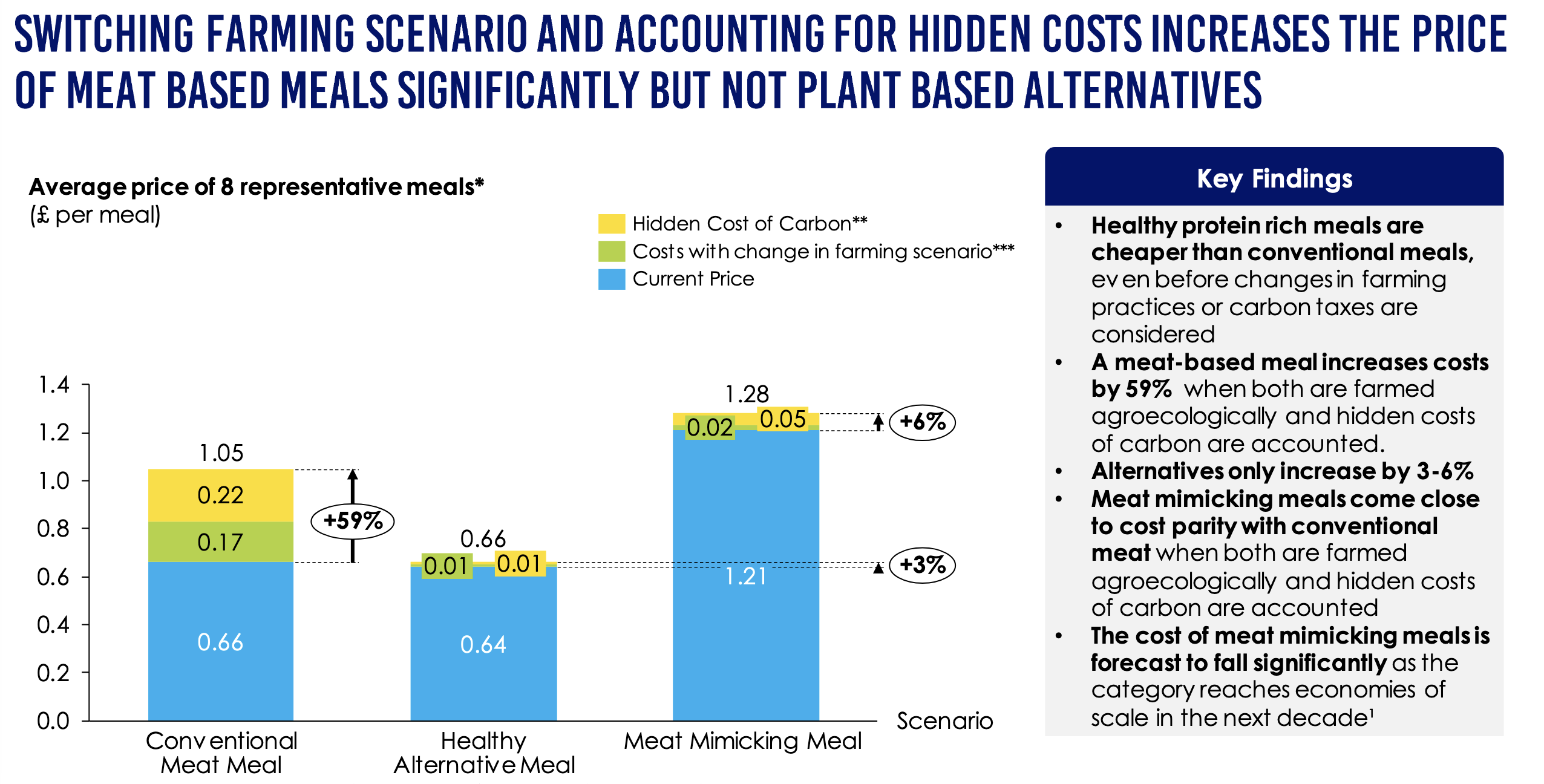
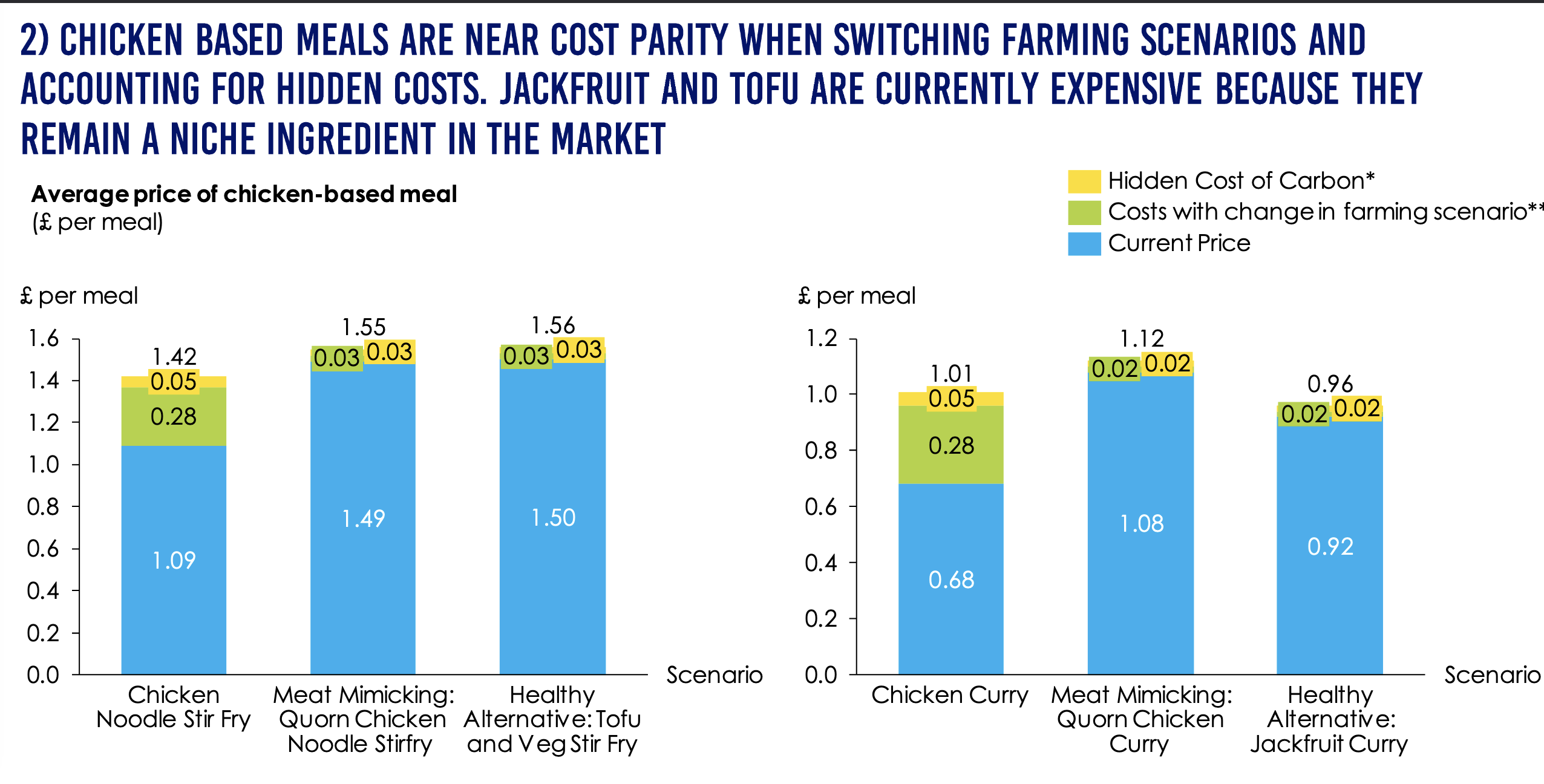
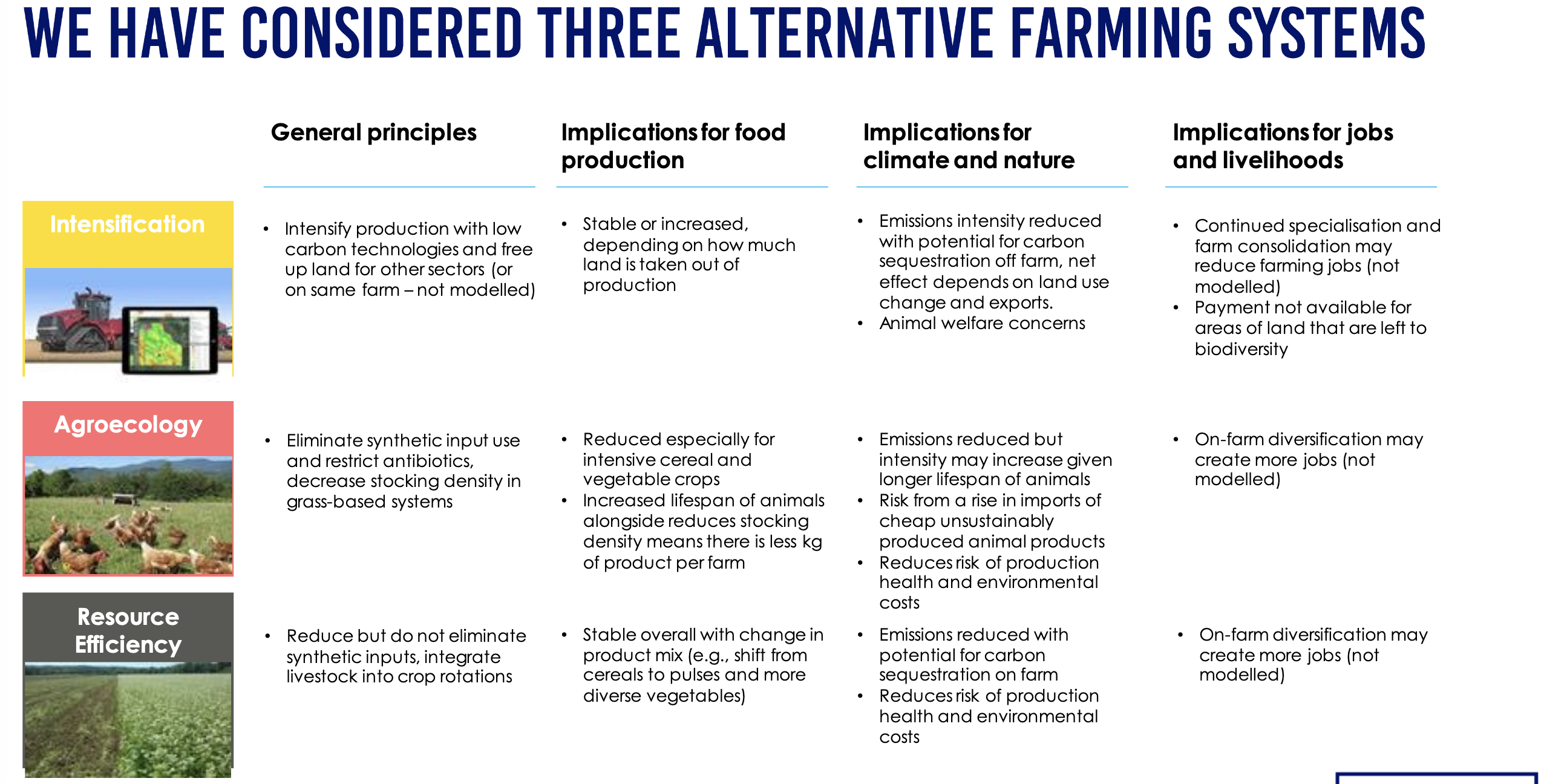
An analysis by Systemiq for the National Food Strategy found that if the UK adopted more nature friendly farming practices such as agroecology or (see slide 39 for description) would not significantly influence prices of UK vegetables, whereas meat products could increase considerable in cost. The price of meat would approach or even exceed that of meat alternatives, and this is not even taking into account decreases in meat alt prices that we'll achieve from scale manufacturing. This means that meat effectively brings 2 food security goals into a conflict that may be difficult to resolve: progress towards net 0 and a flourishing environment may result in painful increases in meat costs. Plant based diets will not have this problem.
Related
- Food security
- UK nutrient security is not significantly boosted by more factory-farmed meat
- Food security in the UK
- Are PB diets cheaper than omni diets
- Low hanging fruit - A policy pathway for boosting uptake of plant-rich diets (Food Foundation, GFI and the Green Alliance)
- The price of pb meat alternatives relative to animal meat
- Estimates of lives and £ saved by moving away from meat